Home /
Guides / How much sun do you need for vitamin D?
How much sun do you need for vitamin D?
☀ 4 min read · Sun & tanning guide
For many people, roughly 10–30 minutes of midday sun a few times a week supports vitamin D - but the honest answer depends on your skin type, the UV index, and how much skin is exposed.
Your skin makes vitamin D when UVB hits it - and UVB only reaches the ground when the sun is high enough, meaning the UV index needs to be around 3 or more. That's why early morning, late evening, and winter sun in many latitudes make little to no vitamin D, even on a clear day.
The factors that change your dose
- UV index: higher UV = faster synthesis (and faster burning).
- Skin type: more melanin filters UVB, so darker skin needs longer than fair skin for the same amount.
- Exposed skin: face and arms make less than face, arms, legs and torso.
- SPF: proper sunscreen blocks most UVB - see SPF and tanning.
- Age, latitude and season all shift the numbers.
The balancing act
The catch is that the same UVB that makes vitamin D also causes burning and long-term damage. The goal isn't maximum sun - it's enough UVB for vitamin D while staying under your burn threshold. Short, regular exposures beat one long session. And for many people, especially in winter, diet or supplements are a safer source than chasing high-UV sun.
Do it in Sunhalo
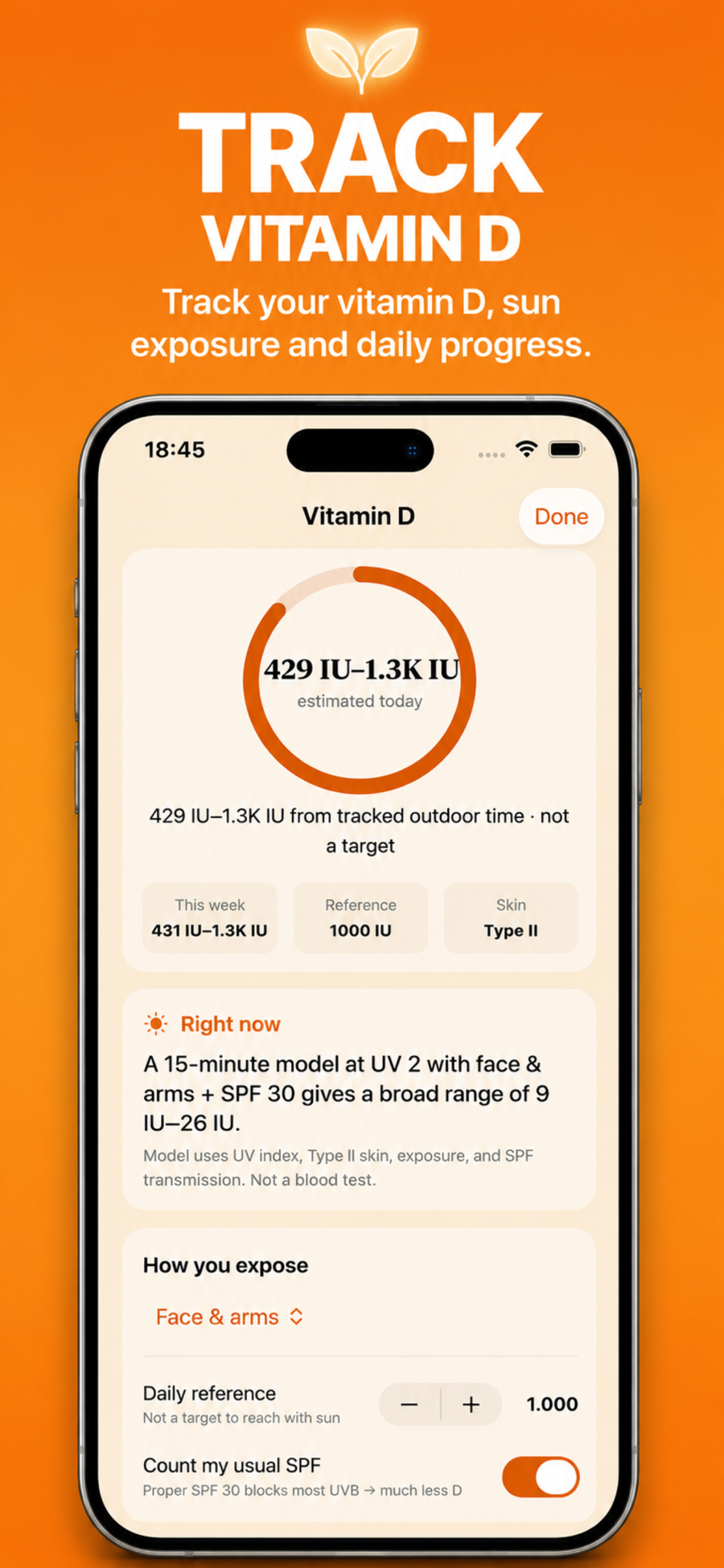
Sunhalo's vitamin D tracker estimates the IU you make each session from the live UV index, your skin type, how much skin is exposed and your SPF - then shows daily and weekly totals. It gives a realistic range (for example, 51–153 IU for 15 minutes at UV 8 with SPF 30), so you can top up sensibly without overdoing exposure. It's a model, not a blood test.
Frequently asked
Can you get vitamin D through a window?
Generally no. Standard glass blocks most UVB, so sitting by a sunny window won't make meaningful vitamin D.
Does sunscreen block vitamin D?
Properly applied SPF blocks most UVB. In practice people rarely apply enough to block it fully, but heavy use reduces production.
How much sun for vitamin D in winter?
In many latitudes, winter sun is too low for UVB to reach you, so little to no vitamin D is made - diet or supplements are often needed.
Keep reading
Sunhalo provides educational estimates, not medical advice, and is not a medical device. Any tan is a sign of UV damage. Medications, altitude, and reflection off water, sand or snow all change your real risk. When in doubt, choose shade.