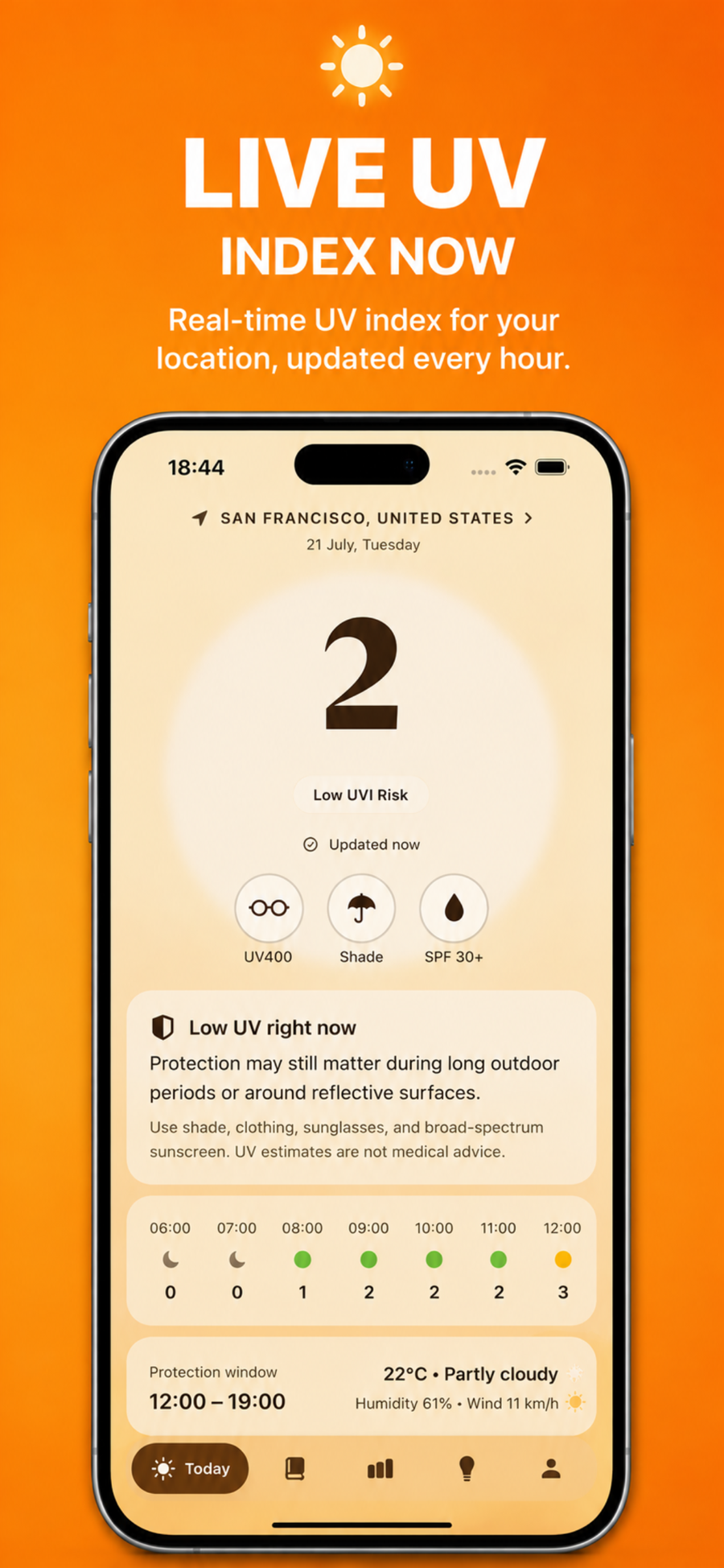
When people ask for the “best” UV index for tanning, they usually mean: what level lets my skin build colour without going pink? For the majority of skin types, that sweet spot sits in the moderate range of UV 3 to 5. It's high enough that your skin produces melanin (the pigment behind a tan), but low enough that you have a reasonable window before burning starts.
It helps to separate two things your skin does in the sun. Tanning is melanin production - a protective response. Burning is inflammation and DNA damage. Both are driven by UV, but burning accelerates far faster at high UV. Chasing UV 8+ doesn't give you a better tan; it just shortens the time until damage.
Why UV 3 to 5 is the practical range
- UV 1–2 (Low): Very gentle. You can tan, but slowly - good for very fair skin.
- UV 3–5 (Moderate): The everyday tanning range. Enough melanin response, manageable burn time with SPF.
- UV 6–7 (High): Tanning happens fast, but so does burning. Keep sessions short and cover up.
- UV 8+ (Very high/extreme): Not a tanning window - a protection window. Seek shade around midday.
Timing matters more than the number
UV follows the sun. It's lowest in early morning and late afternoon and peaks between roughly 10am and 4pm. That's why dermatologists suggest tanning earlier or later in the day: you get moderate UV and softer, more even light. The UV index scale is your guide to reading these windows at a glance.
Your skin type changes the answer
A UV of 4 is a comfortable tanning level for medium skin but can still burn very fair (Fitzpatrick I–II) skin in under half an hour. This is exactly why a single “best UV” number is misleading - the right level depends on your skin and the SPF you're wearing.