Can you tan without burning?
☀ 4 min read · Sun & tanning guide
Yes - you can build colour without burning, but only within limits. The trick is keeping UV exposure below your skin's burn threshold while melanin does its job.
Tanning and burning are two different responses to the same UV. Tanning is your skin making melanin to protect itself. Burning is UV damage outrunning that protection. So the real question is: can you get enough UV to trigger melanin without crossing into damage? For most people, the answer is yes - if you control dose and time.
The honest caveat
There's no such thing as a completely damage-free tan. Any change in skin colour from the sun is a sign your skin has absorbed UV. But “tanning without burning” is realistic and much safer than a burn-then-peel cycle - which damages skin without any lasting colour benefit.
How to tan without burning
- Stay in moderate UV. Aim for a UV index of 3–5 rather than midday peaks.
- Wear SPF anyway. SPF slows burning far more than it slows tanning - see does SPF stop tanning?
- Keep sessions short. 10–20 minutes, then reassess. Colour develops over days, not one long session.
- Know your skin type. Fair skin has a shorter burn window and needs more caution.
- Rotate. Turn so exposure is even and no single area cooks.
The warning signs you've gone too far
Warmth, tightness or any pinkness means stop - redness from sunburn can take 4–6 hours to fully show, so if you wait until you look burnt, you're already past the line.
Do it in Sunhalo
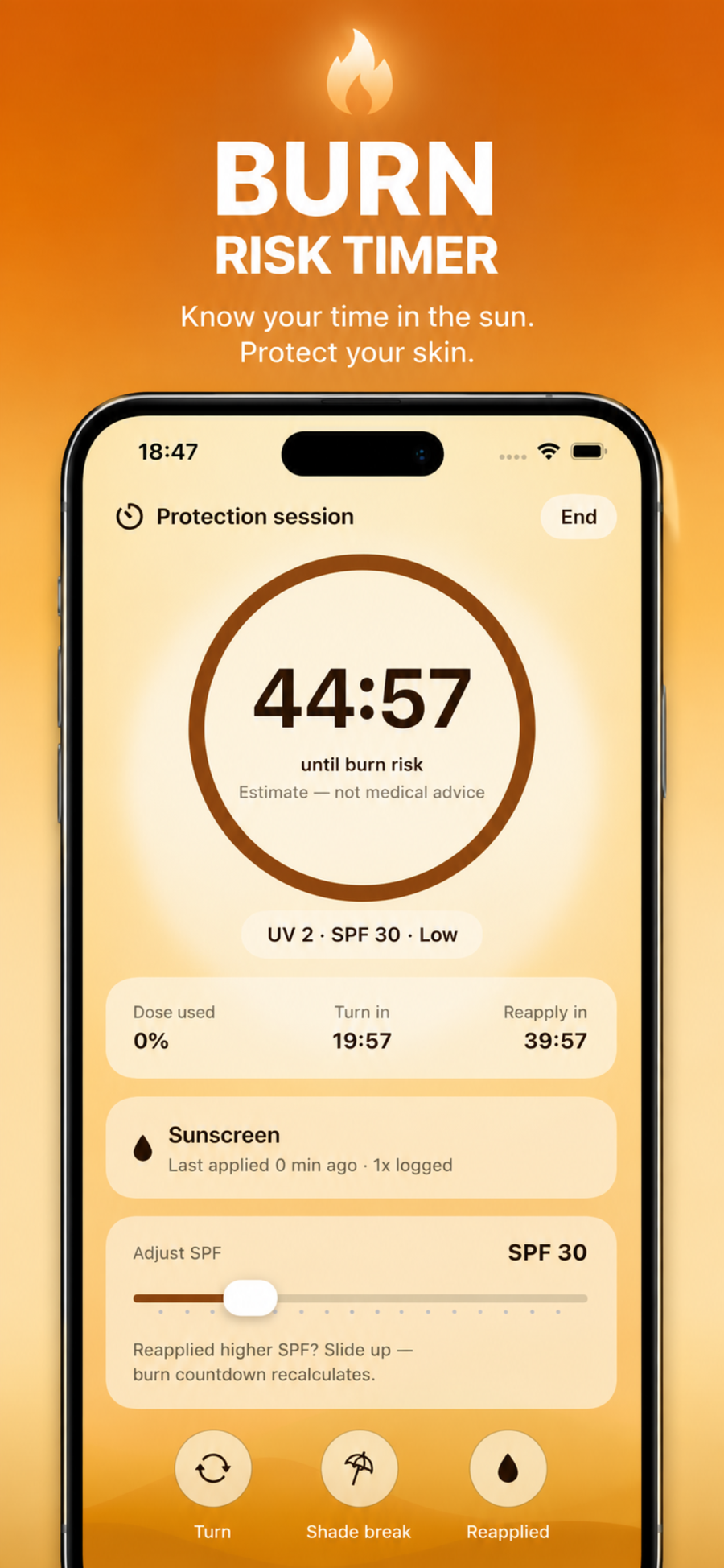
Sunhalo is built around exactly this problem. It takes your skin type and the live UV index and gives you a conservative reassessment estimate - a timer that says when to check back, reapply, or move to shade before you burn. Session coaching prompts you to rotate for even colour, and the Lock Screen countdown keeps running while your phone is in your bag.
Frequently asked
How long can I tan without burning?
It depends on your skin type, the UV index and your SPF. Fair skin may burn in 15-20 minutes at high UV, while medium skin lasts longer. Sunhalo estimates a personal reassessment time instead of a fixed number.
Does everyone tan without burning?
No. People with very fair skin (Fitzpatrick type I) may burn before they tan and should be especially cautious, using shade, clothing and high SPF.
Is a base tan protective?
Barely. A base tan offers roughly SPF 3-4 of protection and is itself UV damage. It's not a substitute for sunscreen.
Keep reading
Sunhalo provides educational estimates, not medical advice, and is not a medical device. Any tan is a sign of UV damage. Medications, altitude, and reflection off water, sand or snow all change your real risk. When in doubt, choose shade.