Home /
Guides / Do you need sunscreen on cloudy days?
Do you need sunscreen on cloudy days?
☀ 3 min read · Sun & tanning guide
Yes. Clouds block visible brightness and heat far more than they block UV - up to 80% of UV can pass through light cloud, so your burn risk can stay high on a grey day.
It feels counterintuitive: it's overcast, cooler, not glary - surely UV is low? But the sensations you associate with strong sun (brightness and warmth) come mostly from visible light and infrared, not UV. Thin or broken cloud scatters UV rather than absorbing it, and can even intensify it briefly through gaps - an effect called broken-cloud enhancement.
How much UV gets through
- Thin/high cloud: up to ~80–90% of UV still reaches you
- Broken cloud: can spike above clear-sky levels around the gaps
- Thick, dark storm cloud: more UV is blocked, but rarely all of it
This is why people are surprised by a sunburn after a “cloudy” beach day or a long overcast hike. The UV index accounts for cloud in its forecast, so it's a far better guide than how bright it looks.
The rule of thumb
The World Health Organization recommends protection whenever the UV index is 3 or higher - cloudy or not. If your forecast says UV 5 under cloud, treat it like UV 5. Check the number, not the sky.
Do it in Sunhalo
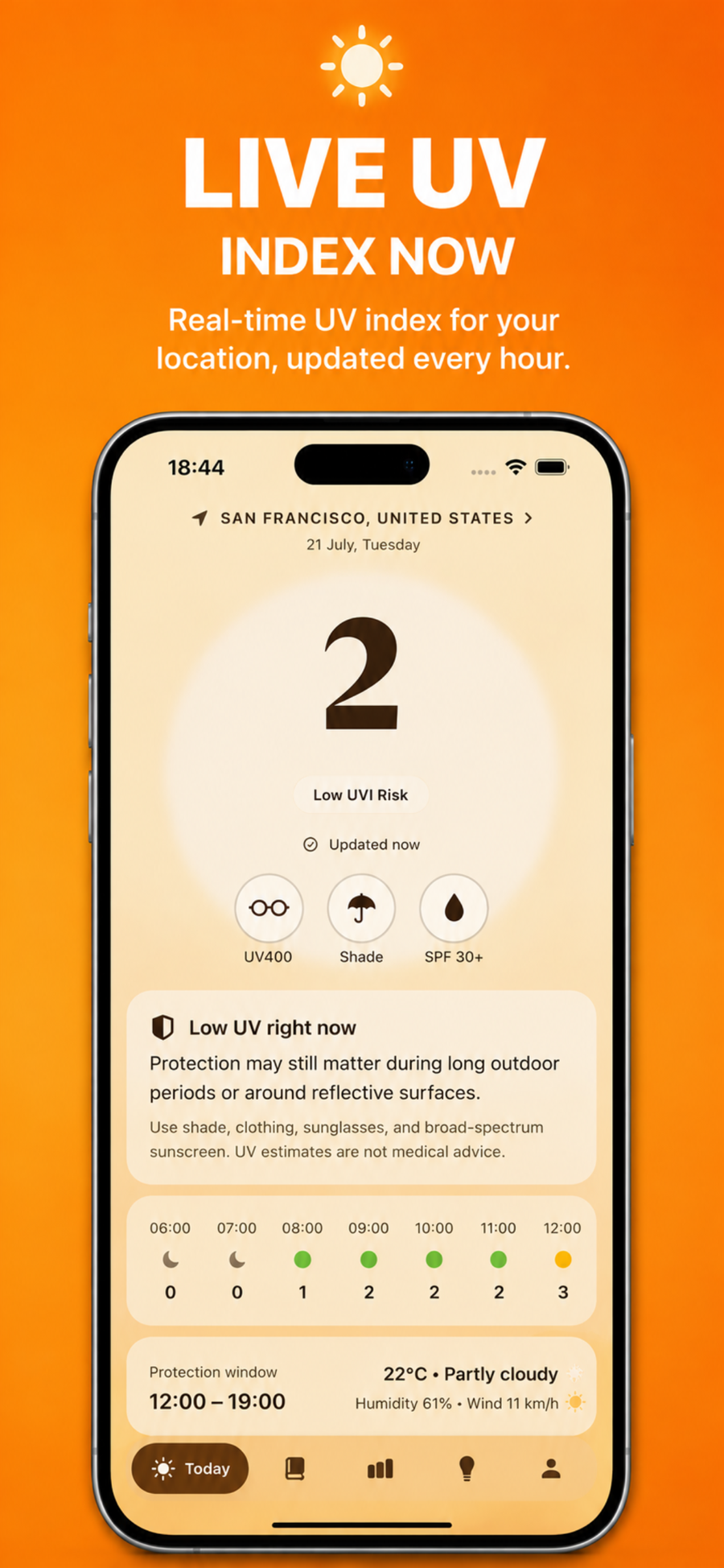
Sunhalo pulls the live UV index and hourly forecast for your exact location, with cloud already factored in - so you see the real number even when the sky is grey. If it crosses into protection territory, the app flags it and can remind you to cover up, instead of leaving you to judge by brightness.
Frequently asked
Can you get sunburned on a cloudy day?
Yes. Up to 80% of UV penetrates light cloud, so sunburn is very possible on overcast days, especially near water, snow or at altitude.
Does the UV index account for clouds?
Yes. UV index forecasts factor in expected cloud cover, which makes the index a much more reliable guide than how bright or warm it feels.
Do I need sunscreen in winter?
If the UV index is 3 or higher, yes - particularly with snow, which reflects up to 80% of UV back at you.
Keep reading
Sunhalo provides educational estimates, not medical advice, and is not a medical device. Any tan is a sign of UV damage. Medications, altitude, and reflection off water, sand or snow all change your real risk. When in doubt, choose shade.